Español
 русский
 Français
 عربي
عربي Italiano
 Deutsche
 中文
中文


Choosing the right outer cage for High-Flow Pleated PP Filter Cartridges is critical for system performance. This support structure directly impacts pressure resistance, service life, and cost-efficiency. The wrong choice can lead to cartridge collapse, media bypass, and costly downtime. This guide breaks down the 5 main types of outer cages, helping you match the perfect cage to your working conditions and budget.
Why High-Flow Pleated Filters Need Strong Outer Support?
High-flow pleated PP filters are widely used in industrial water treatment, pure water production, and chemical filtration. Their large filtration area and glue-free construction make them highly effective. However, their pleated media is vulnerable to water impact and pressure surges. A robust outer support frame secures the media, prevents deformation, and ensures consistent filtration quality.
5 Types of Outer Cages for High-Flow Filter Cartridges
1. Standard PP Cage - Budget-Friendly Basic Choice
Best for: Low-pressure, general-purpose filtration with tight budgets. This entry-level cage is made from injection-molded polypropylene. It's lightweight, cost-effective, and compatible with most standard housings.
● Pros: Low cost, good chemical resistance for general water.
● Use: Municipal pre-filtration, swimming pools, stable low-pressure water.
● Cons: Weak structural strength (welded sections), prone to deformation under high pressure.
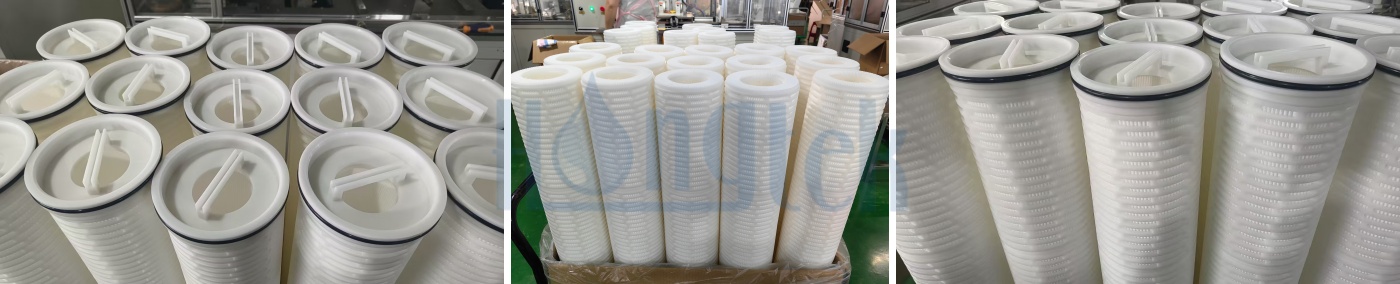
2. 40-inch Integrated PP Cage - Best Value Universal Option
Best for: Most industrial water and chemical projects seeking performance and value. This integrally molded cage (no segments) offers far greater rigidity and deformation resistance than standard versions.
● Cons: Slightly higher cost than basic PP, but excellent value.
● Use: Industrial pure water, cooling water, chemical pre-treatment, boiler feed, electroplating wastewater.
● Pros: High-density support prevents collapse; over 30% longer lifespan than segmented cages; reliable under startup surges.

3. PP Wound Outer Band - Reinforced for Tough Conditions
Best for: Fluctuating pressure and fluids with minor impurities. High-tensile PP fiber bands are tightly wrapped around the cartridge, forming a dense protective layer.
● Cons: Slightly higher pressure drop than open cages.
● Use: Industrial reclaimed water, wastewater pre-treatment, general chemical fluids.
● Pros: Excellent impact/abrasion resistance; distributes localized pressure to prevent deformation.

4. Premium Materials: Stainless Steel & PBT Cages
Best for: Extreme conditions - high temperature, high pressure, severe corrosion.
Stainless Steel (304/316):
● Unmatched strength, heat resistance, and reusability.
● Use: High-temp fluids, high-pressure systems, harsh chemicals, pharmaceuticals.

PBT (Engineering Plastic):
● Superior to PP in heat resistance and dimensional stability.
● Use: High-temp water treatment, special solvents, electronic ultrapure water.

Quick Comparison Table
| Cage Type | Material | Pressure Resistance | Temperature | Ideal Use |
| Standard PP | Polypropylene | Low | ~80°C | Low-pressure, general water |
| 40-inch Integrated PP | Enhanced Polypropylene | Medium-High | ~80°C | Most water/chemical pre-filtration |
| PP Wound Band | PP Fiber | Medium | ~80°C | Fluctuating pressure, abrasives |
| Stainless Steel | 304/316L Stainless Steel | Very High | >200°C | High-temp, high-pressure, corrosive |
| PBT | PBT Plastic | High | ~120°C | High-temp water, solvents, ultrapure |
Hongtek Filtration Co., Ltd.

Copyright © Hongtek Filtration Co., Ltd. All Rights Reserved | Sitemap